Category Archives: Writing

The Villain- Part 2

=

Aspects- The writer should make the hero with character vulnerability and we should feel empathy/sympathy for them.  We need to connect on an emotional level so when the villain shows up we feel for the hero.  This draws interest to the protagonist.

By giving the protagonist danger and situations it helps us relate to them. Give them barriers, detours, step backs- just don’t make it easy for them.  The story does not have to have a happy resolution but it needs to be solved.

Do the following exercise for the villain you have in your story.

Writing Exercises for Part Two: Building Villains

1-Create a character who is an Antagonist, and explain why he or she fulfills that function.

2-Create a character who is an Influence Character, and explain why he or she fulfills that function.

3-Create a character and describe how you would make him or her the Second Most Central Character.

4-Create a character who is a Bad Guy and describe why.

5-Create a classic Villain type, and describe ow he or she is possesses of all four essential qualities of a Villain.

6-Turn this Villain character you have created into a non-villainous person, while maintaining his dramatic function as a Villain.

How to Create a Credible Villain in Fiction

Make your villain three-dimensional. Give the villain a back story or tell a part of the storm from his POV. You want the readers to get a clear picture of the villain and his evil nature.
Consider his motive. Fiction readers are not going to believe a villain who has no clear motive for his actions.  His motive can be something from his past or a conflict that arose between him and the hero.
Write the villain around his possible psychological profile. For example, if you want to make him a sociopath, give him characteristics that fit in with this depiction.

By doing this, your villain should be able to help your hero move the story along.

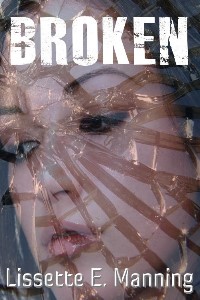
“Broken” by Lissette E. Manning

Broken” by Lissette E. Manning

Broken” is a short story based on a woman who is going through turmoil. Readers dive into this story learning about her troubles early on. The words this author uses makes us envision what is going on, an excellent example of show and not tell. It being a short story one has to compact a beginning, middle and ending quickly and effectively. This author succeeded. We learn of the main character that is broken in so many ways with a miscarriage, failed marriage and so on. But we also learn she is a strong woman who can recover and can make it. A short but powerful read.

Available for purchase soon via the following retailers: Amazon, Barnes & Noble, Smashwords

Characters Make The Plot- Part 1

These are the notes from my Character Development class. This is week 4.

The setting tells you where and when a story line is occurring. It has to be believable for it gives you the opportunity to deliver a backdrop for your book.

For example:

If you are in the tundra or jungle odds are the book is an adventure.

If the dust bowl in the Midwest is where you are at the character might experience tough times in the story line.

Mood and setting can change through the book one just has to make it believable for the reader.

Location and weather also hints where the reader will find themselves. The setting gives us the physical boundaries, it develops the plot and characters.

The protagonist is the central figure that readers can identify with but they must go through changes through the book or else they will fall flat and one dimensional. The antagonist is working against our hero, the protagonist You want your characters to be well rounded. They should have positive features and still be flawed making them dynamic as they change with the experiences they encounter.

Static characters- Static characters are minor characters in a work of fiction who do not undergo substantial change or growth in the course of a story. Also referred to as “two-dimensional characters” or “flat” they play a supporting role to the main character, who as a rule should be round or complex.

Flat characters- A flat character is a minor character in a work of fiction who does not undergo substantial change or growth in the course of a story. Also referred to as “two-dimensional characters” or “static characters,” flat characters play a supporting role to the main character, who as a rule should be round.

Characterization-Ways to develop characters directly or indirectly. Directly we state what the character looks like, what they say, do or feel. Indirectly we let the readers draw the conclusions by the words written.

Plot- An arrangement of sequence of the story including conflict and obstacles.

There were a lot of notes to put in one post. So will make this a two parter.

Next post will be on the different type of plots.