Category Archives: Creative Writing

Inner Life of A Character

The Inner Life of Your Character

These are the notes from my Character Development class , week 6

One must try to write the character to where the reader can

-relate to the them

-knows someone like them

Outer life vs Inner life

Outer life- it is more the physical description, the surface details of one’s characters

Inner life-this tells the reader what the character is about

Works of fiction is bringing intimacy to the pages. As writers it is our job to foster that which will help

fast forward our characters.  We are in charge of creating a character it is not for our readers to do that.

Writers tend to stop with the basic character description without giving them life. Is the dialogue

believable? In the speaking one can give more details of our characters. The reader when reading must

feel our characters are real or could be real live people that they can come across in the street.  You need to cover every aspect of their lives, go the extra mile when dissecting them.

Imagine them as being your heroes that you had growing up. What did you look up to them, what was it about them that made you want to be like them? Use this for your villain and hero if you can.

Conversation focus- By observing what they talk about. Can you get a vivid image of what they are saying?

Try listening to people talking as you go about your daily activities. Try to really listen for just a minute

or two.

Allocation of time- How does your character spend their day. What is their norm and routine? How much time is spent doing each activity? What are their habits? Do they have regrets? Do they hold

grudges? What do they do and why? Do they have any dreams and if so of what? What are their goals?

These are just some of the questions we can ask about our characters to make them less superficial.

Every character needs change in the story but it is recommended to make it slow and gradual instead of

all at once.

A way to kick-start the inner life of your characters is ask some of the questions below

-What makes them afraid and why

-What lead up to this?

-What is important to them?

-What secrets/quirks do they have and why

-Three or four words to describe them

-Are they successful in their endeavors and why

-Do they act one way to some and different to others?

-Are they materialistic?

-Show don’t tell their clothing, how they carry themselves, how they speak and what kind of person they are.

These are just some ways to bring the inner life of your character to the fore front.

Use this with each of your major characters. If you use it for the minor characters, you might derail the story.

I have two more sessions left and this class will be done.

Characters Make The Plot- Part 2

Part 2

1-Character vs Character- protagonist vs another character

2-Character vs Nature- A hiker vs the cold Yukon

3-Character vs Society- Jonas vs the norm of his community( popular in YA books)

4-Character vs Self-The character over our own fears, guilt, self-esteem etc.

5-Character vs Fate-Using the example of Stanley in the book “ Holes”. Stanley vs the family curse

One plot will take center stage and become the main plot.

Subplot- A secondary plot strand that is a supporting side story for any story or the main plot. Subplots may connect to main plots, in either time and place or in thematic significance. Subplots often involve supporting characters, those besides the hero and villain.

Situation irony- This is where the ending is the opposite of what the reader thought it would be.

One needs plot, setting and characters all threaded together to give substance to one’s story.  Some authors use multiple themes. Themes add meaning and depth to a story in fiction

There are four elements to make one’s writings complete: setting, character, plot, theme.

Put equal attention to one’s antagonist for you may flip and he soon becomes the good guy or the one that readers attach to Try to give as many problems as possible to make one’s character more developed.

A plot needs to have three elements:

1-Character Emotions-These should be seen in the first five or six sentences of the story. This creates fascination.

2-Dramatic action-This is the action that happens in a novel, screenplay, memoir, short story, or any other kind of writing that causes a character to react and thus be affected by and changed at depth over the duration of the story. This provides excitement.

3-Thematic significance-This is the deliberate step-by-step development of the underlying meaning of the overall project. This portrays the overall story meaning. When the dramatic action changes the character at depth over time, the story becomes thematically significance.

If a writer does not have all three you will lose your audience. The story will falter or get stuck.

This class is moving along pretty well. We are halfway done

Characters Make The Plot- Part 1

These are the notes from my Character Development class. This is week 4.

The setting tells you where and when a story line is occurring. It has to be believable for it gives you the opportunity to deliver a backdrop for your book.

For example:

If you are in the tundra or jungle odds are the book is an adventure.

If the dust bowl in the Midwest is where you are at the character might experience tough times in the story line.

Mood and setting can change through the book one just has to make it believable for the reader.

Location and weather also hints where the reader will find themselves. The setting gives us the physical boundaries, it develops the plot and characters.

The protagonist is the central figure that readers can identify with but they must go through changes through the book or else they will fall flat and one dimensional. The antagonist is working against our hero, the protagonist You want your characters to be well rounded. They should have positive features and still be flawed making them dynamic as they change with the experiences they encounter.

Static characters- Static characters are minor characters in a work of fiction who do not undergo substantial change or growth in the course of a story. Also referred to as “two-dimensional characters” or “flat” they play a supporting role to the main character, who as a rule should be round or complex.

Flat characters- A flat character is a minor character in a work of fiction who does not undergo substantial change or growth in the course of a story. Also referred to as “two-dimensional characters” or “static characters,” flat characters play a supporting role to the main character, who as a rule should be round.

Characterization-Ways to develop characters directly or indirectly. Directly we state what the character looks like, what they say, do or feel. Indirectly we let the readers draw the conclusions by the words written.

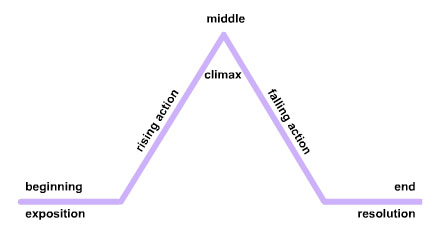
Plot- An arrangement of sequence of the story including conflict and obstacles.

There were a lot of notes to put in one post. So will make this a two parter.

Next post will be on the different type of plots.