All posts by NewEngland_Muse

I'm a traditionally and self published author. I write in the genre of children and YA at the moment but working my way up to adults. I'm a sports loving, photo taking gal who loves to sing/dance to my own enjoyment. I love to laugh even at myself. I am also owned by 8 birds and 2 hamsters, and yes they know it. :)

Characters Make The Plot- Part 2

Part 2

1-Character vs Character- protagonist vs another character

2-Character vs Nature- A hiker vs the cold Yukon

3-Character vs Society- Jonas vs the norm of his community( popular in YA books)

4-Character vs Self-The character over our own fears, guilt, self-esteem etc.

5-Character vs Fate-Using the example of Stanley in the book “ Holes”. Stanley vs the family curse

One plot will take center stage and become the main plot.

Subplot- A secondary plot strand that is a supporting side story for any story or the main plot. Subplots may connect to main plots, in either time and place or in thematic significance. Subplots often involve supporting characters, those besides the hero and villain.

Situation irony- This is where the ending is the opposite of what the reader thought it would be.

One needs plot, setting and characters all threaded together to give substance to one’s story.  Some authors use multiple themes. Themes add meaning and depth to a story in fiction

There are four elements to make one’s writings complete: setting, character, plot, theme.

Put equal attention to one’s antagonist for you may flip and he soon becomes the good guy or the one that readers attach to Try to give as many problems as possible to make one’s character more developed.

A plot needs to have three elements:

1-Character Emotions-These should be seen in the first five or six sentences of the story. This creates fascination.

2-Dramatic action-This is the action that happens in a novel, screenplay, memoir, short story, or any other kind of writing that causes a character to react and thus be affected by and changed at depth over the duration of the story. This provides excitement.

3-Thematic significance-This is the deliberate step-by-step development of the underlying meaning of the overall project. This portrays the overall story meaning. When the dramatic action changes the character at depth over time, the story becomes thematically significance.

If a writer does not have all three you will lose your audience. The story will falter or get stuck.

This class is moving along pretty well. We are halfway done

Characters Make The Plot- Part 1

These are the notes from my Character Development class. This is week 4.

The setting tells you where and when a story line is occurring. It has to be believable for it gives you the opportunity to deliver a backdrop for your book.

For example:

If you are in the tundra or jungle odds are the book is an adventure.

If the dust bowl in the Midwest is where you are at the character might experience tough times in the story line.

Mood and setting can change through the book one just has to make it believable for the reader.

Location and weather also hints where the reader will find themselves. The setting gives us the physical boundaries, it develops the plot and characters.

The protagonist is the central figure that readers can identify with but they must go through changes through the book or else they will fall flat and one dimensional. The antagonist is working against our hero, the protagonist You want your characters to be well rounded. They should have positive features and still be flawed making them dynamic as they change with the experiences they encounter.

Static characters- Static characters are minor characters in a work of fiction who do not undergo substantial change or growth in the course of a story. Also referred to as “two-dimensional characters” or “flat” they play a supporting role to the main character, who as a rule should be round or complex.

Flat characters- A flat character is a minor character in a work of fiction who does not undergo substantial change or growth in the course of a story. Also referred to as “two-dimensional characters” or “static characters,” flat characters play a supporting role to the main character, who as a rule should be round.

Characterization-Ways to develop characters directly or indirectly. Directly we state what the character looks like, what they say, do or feel. Indirectly we let the readers draw the conclusions by the words written.

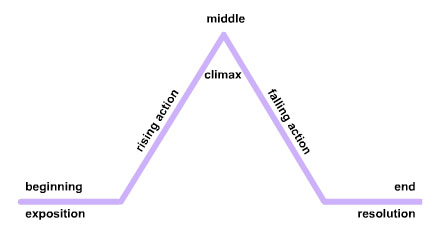
Plot- An arrangement of sequence of the story including conflict and obstacles.

There were a lot of notes to put in one post. So will make this a two parter.

Next post will be on the different type of plots.

Writing Conference

This past Saturday I attended my first writers conference. It was free and not to far away.

Getting Published: What Do Publishers Want?” was the first seminar I attended. While the information obtain was not earth shattering new I still enjoyed being in the presence of actual publishers. Copious notes were taken for me to share with fellow writers who had not attended the conference.

I got two things out of this . The first was that small independent presses are willing to work with the author up front without a literary agent. In fact most prefer you don’t have one. Second, I was introduced to five more firms I can send my query letter to. For me these two things were worth my attendance.

The next seminar that caught my eye was “How To Write for Children”. One of the presenters was a 12-year-old boy who has three books in print. Most of the information was not new to be but I did learn again two thing. What I gained from this was two more publishing house names that I had not come across through the Writer’s Market book.

The last seminar I attended was “Traditional Publishing vs Self Publishing”. This section reaffirms what I have been doing since last March which is creating an online presence through social media outlets.

One of the panelist stated that people who go the traditional route are taken more serious. Also, more doors are open to them through the contacts they meet apart from the publishing house they are with.

If you are an aggressive individual and can promote yourself well self- publishing would work for you. If that is not your style and you need the help of a publisher it was recommended to try to get your book in print.

At the moment I am trying to go the traditional route. My books deserve the chance to shine in this avenue. For the past three weeks I have steadily been submitting query letters, chapters, synopsis and cover letters to various publishing houses. The list I am working from is only half way crossed off. A deadline in my head has been given and when that time frame comes then will be looking at self publishing.

Whether I am aggressive enough to promote myself remains to be seen. At least in this day and age I’m fortunate to have the option of ebooks where years ago that was not the case.